This 2025 Postgraduate National Arts Council (NAC) Arts Scholarship recipient considers the arts as a space to highlight social issues.
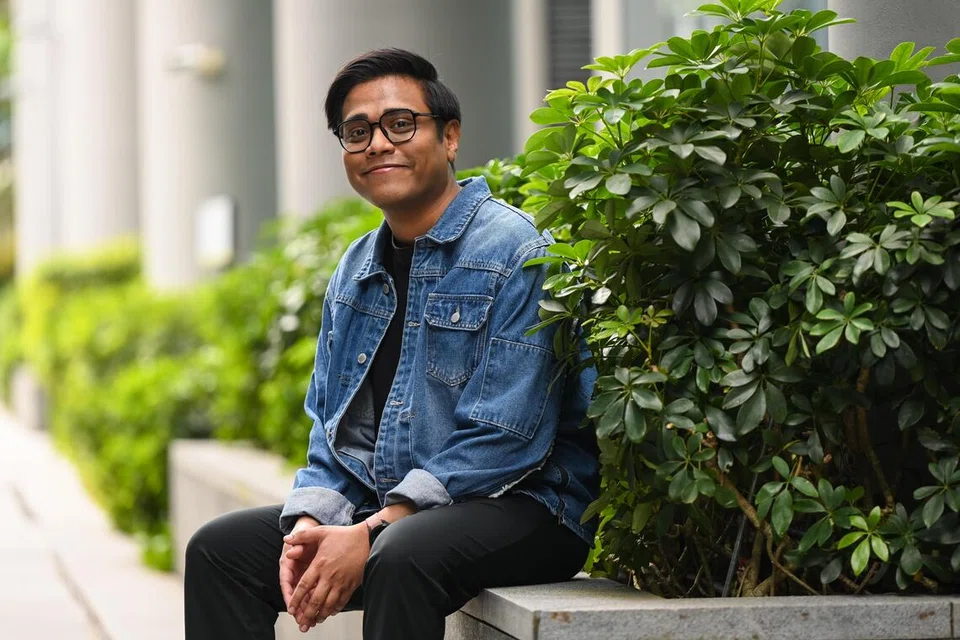
Mr Muhammad Muazzam was only 17 years old when he spent time with his grandmother, who was bedridden in hospital following a stroke.
In 2012, less than a year after the stroke, and after about three months of caring for her, the woman who had been the pillar of strength in his life passed away.
Over a decade of grieving, Mr Muazzam, now 30, turned to the performing arts as a way to cope with his sorrow and to express his lived experiences.
He is currently pursuing a Master’s degree in Gerontology — a multidisciplinary field of study on ageing — at the Singapore University of Social Sciences (SUSS).
For 15 years, Mr Muazzam has used the performing arts as a space to foreground complex social issues, while aspiring to build an inclusive society that views the ageing process with empathy, creativity, and respect.
Mr Muazzam, better known as Zam, is a theatre practitioner specialising in community-based applied theatre — working to bring theatre practice across sectors and collaborating with diverse groups including youths, seniors, and persons with special needs.
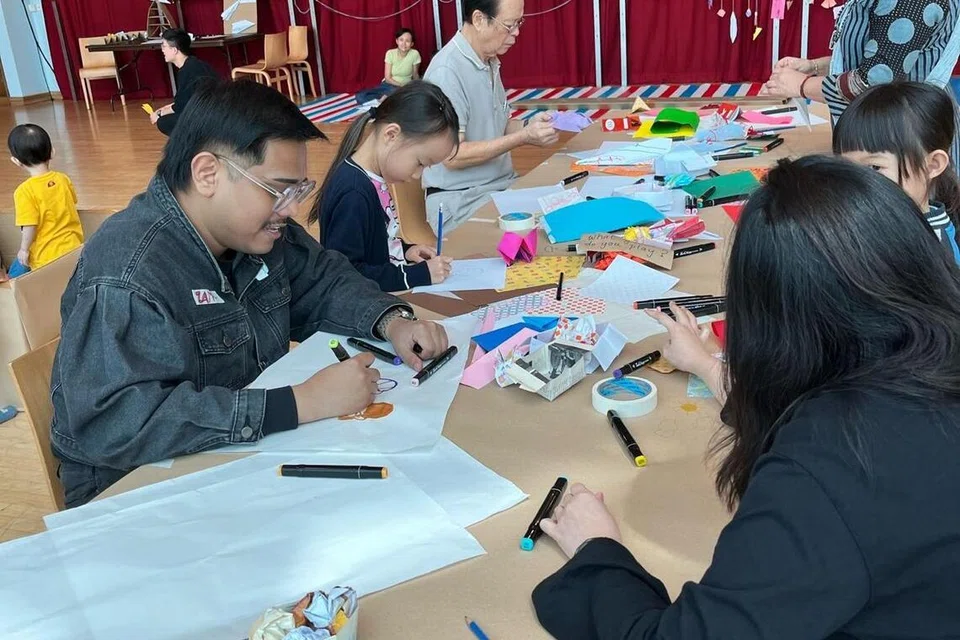
This field uses drama activities such as acting, improvisation, storytelling, and unscripted performances as tools to help individuals examine their own experiences and the social issues around them.
The focus is on participation, reflection and impact on a particular group or community.
This differs from mainstream theatre, which typically centres on scripted performances for paying audiences, with priority placed on artistic excellence and aesthetic presentation.
“The aim is to honour diverse stories (of specific groups or communities) with dignity. And the way I honour those stories can take many artistic forms.
“It could take the shape of a workshop or a video project, such as our podcast. Or it could also be through a theatre performance,” he said when asked about one of his areas of specialisation, reminiscence theatre — a form within applied theatre practice.
He is generous with his smiles and jokes frequently throughout the interview with Berita Minggu.
Yet beneath his seemingly easygoing demeanour lies a steadfast commitment to championing the voices of those on the margins.
The Challenge of Ageing
In his speech at the National Day Rally on 17 August, Prime Minister Mr Lawrence Wong said that Singapore is set to become a super-aged society by 2026.
“This Master’s programme allows me to learn and fill knowledge gaps about systems related to ageing issues, enabling my performing arts practice to serve as a vehicle for social change,” said Mr Muazzam.
In recognition of his tireless efforts, Mr Muazzam was awarded the National Arts Council (NAC) Postgraduate Arts Scholarship 2025 on 5 August, making him one of five recipients of the scholarship.
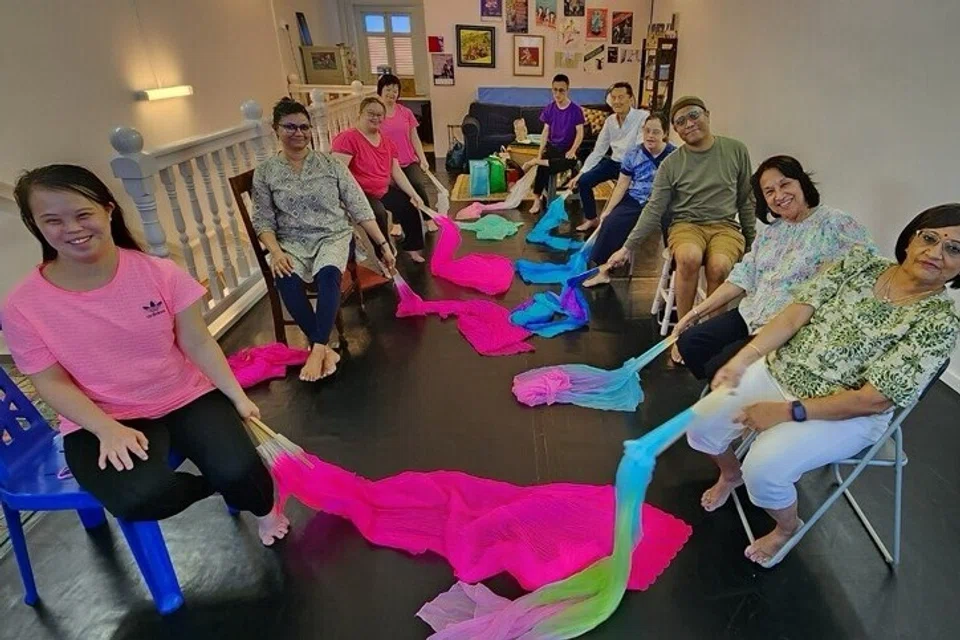
“In the concept of active ageing, it is about encouraging seniors to do things together as a community.”
“My late grandmother was often at home. I rarely saw her go out, except when we travelled to Malaysia to visit family — and even that was very rare.”
“My mother, now in her 50s, has bags full of medications and was recently diagnosed with arthritis. She also rarely goes out… only when she is working.”
“How many seniors or elderly individuals in our Malay/Muslim community live in a similar way? What happens when seniors choose to isolate themselves (and not go out)? That becomes a problem,” said Mr Muazzam, an only child who is currently single.
Art Is More Than Just a Medium for Entertainment
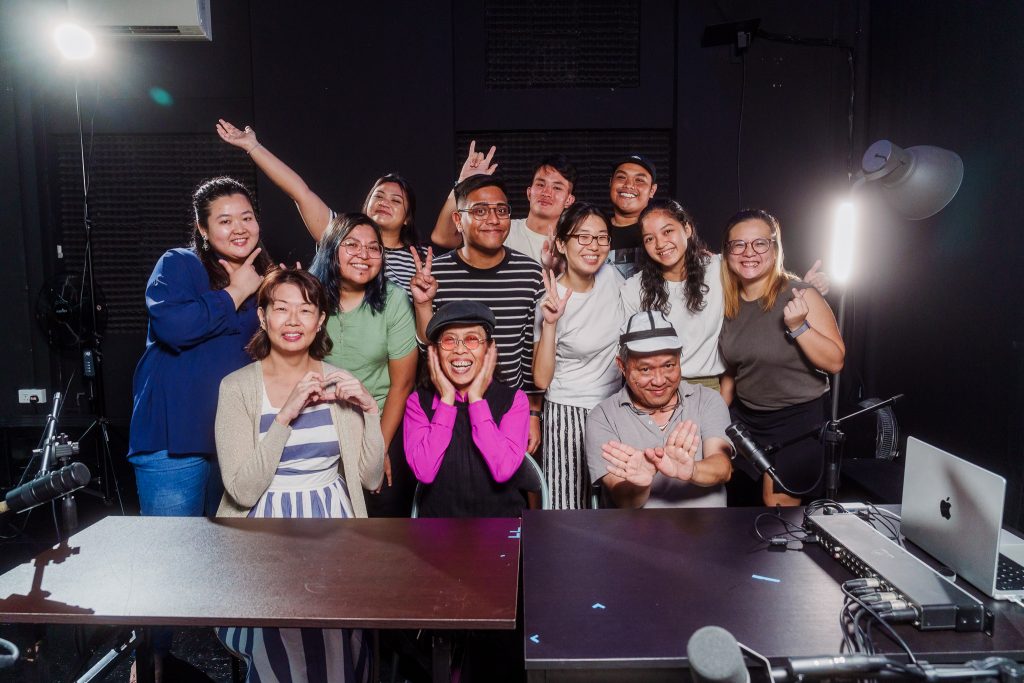
On 25 September, in his speech during the debate on the President’s Mandate in Parliament as Acting Minister for Culture, Community and Youth, Mr David Neo expressed appreciation for Mr Muazzam’s cross-sector work through the Arts for Action (AFA) initiative, where theatre practice is used as a bridge beyond the arts sector into areas such as social services, healthcare, and education.
Mr Muazzam believes that art — with its inherent value of social connectedness — plays a crucial role in helping individuals discover their sense of agency, take ownership of their lives, and shape their own futures.
He is of the view that much more needs to be done to mature Singapore’s arts ecosystem.
“We need to reassess how we measure success when it comes to funding community-based arts programmes.”
“One thing we must also do is invest in community workers and cultural workers.”
“They are the individuals who reach out to and connect marginalised communities,” he said.
Through his work as Founder and Artistic Director of AFA, his artistic practice remains an ever-evolving field that is difficult to define.
“I want to explore how to build a sustainable and resilient arts workforce.”
“Because, to me, we are actually creating jobs that do not yet exist,” he added.
His next project, Echoes of 217, is a Theatre-in-Education (TIE) programme that explores issues of race and religion through a re-enactment of the 1964 racial riots, and will be presented from January to March 2026 to various participant groups.
The project has received full support from the Nanyang Academy of Fine Arts (NAFA) Collaborative Lab grant and is a collaborative effort between AFA and Dialogue Centre.
The programme will be staged at NAFA.
Originally published in Berita Harian on 21 Dec 2025 at 2:34pm “Penggiat teater teroka wadah seni tingkat kesejahteraan warga emas, masyarakat terpinggir” by Muhd Harraz Hamid, mharraz@sph.com.sg (Article link)
You may view the original Malay version version here.